
The Heart of Admiral: A Neighborhood Built Around Community
Some neighborhoods are defined by a landmark. Others by a business district or a particularly beautiful view. In Admiral, it is harder to separate the neighborhood from the places where people actually come together.
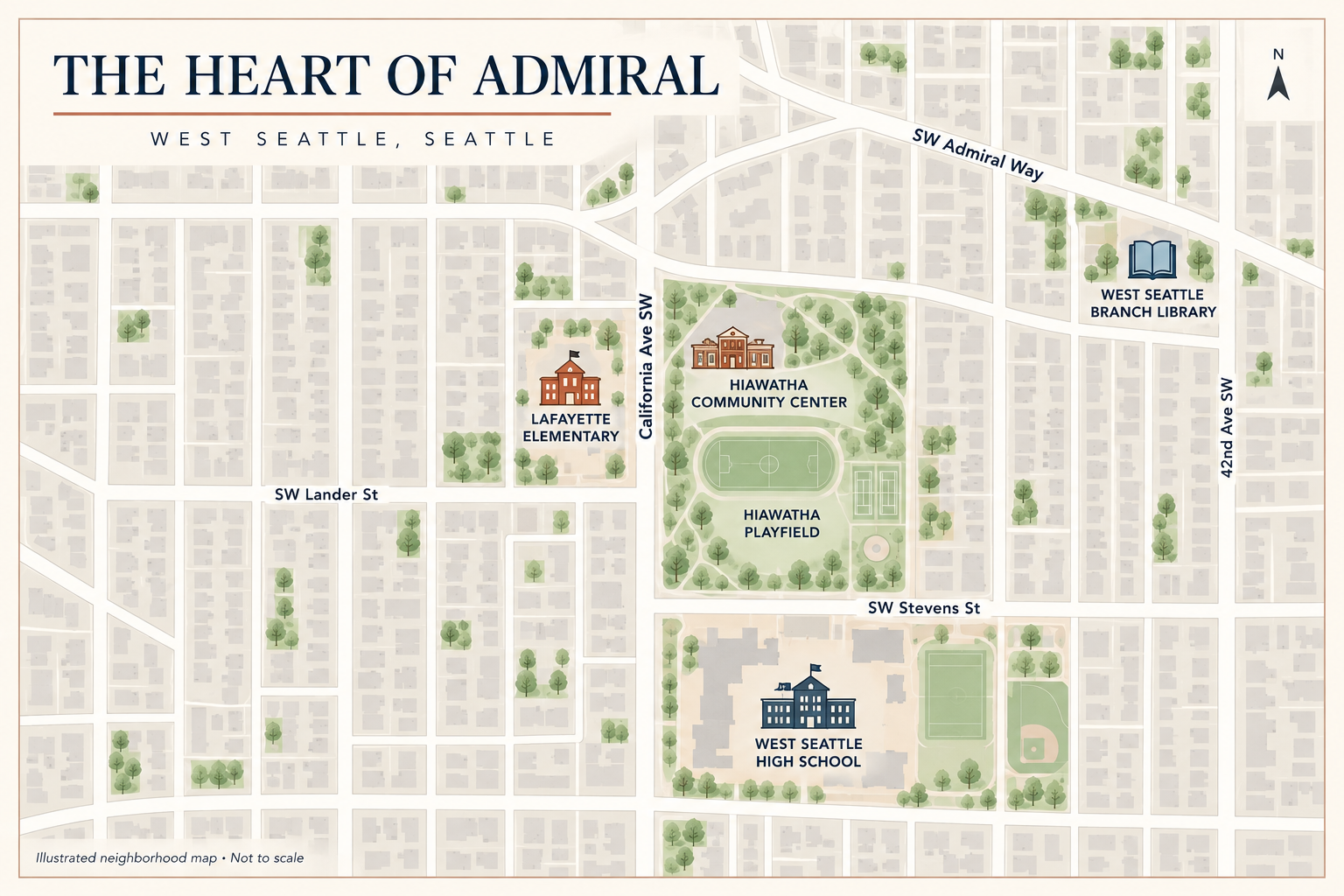
Around California Avenue SW, Hiawatha Community Center, Lafayette Elementary, West Seattle High School and the West Seattle Library sit remarkably close to one another. Add the Admiral business district just up the street, and you begin to understand why this part of West Seattle has such a distinct sense of place.
These aren't simply destinations on a neighborhood map. They are places woven into daily life.
And in 2026, one of Admiral's longtime gathering places opened its doors again.
Hiawatha Is Back
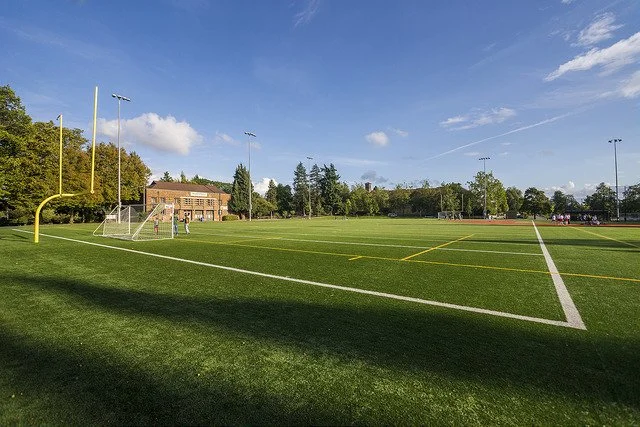
After a six-year closure, the historic Hiawatha Community Center reopened in February following an extensive renovation.
For Admiral, that's a meaningful return.
Built in 1911, Hiawatha is more than a recreation building. Generations of West Seattle residents have come through its doors for sports, classes, camps, community programs and neighborhood gatherings.
The renovated center once again offers spaces for those everyday connections, including its gymnasium, auditorium and program rooms. Its current schedule includes activities for children, teens and adults, bringing regular programming back to the heart of the neighborhood.
Outside, Hiawatha Playfield continues to be one of Admiral's most recognizable green spaces, with its athletic field, track, tennis courts, wading pool and open lawn.
The play area is undergoing a separate renovation of its own. The project will relocate and update the playground, improve accessibility and visibility, add gathering space and eventually turn the former playground area into a nature play space.
It is a significant new chapter for a place that has been part of West Seattle for more than a century.
A Remarkable Corner of the Neighborhood
What makes Hiawatha particularly interesting is what surrounds it.
West Seattle High School sits immediately to the south. Lafayette Elementary is nearby. So is the West Seattle Library.
These places have developed alongside one another for generations, creating a pocket of Admiral where recreation, education and community life overlap.
That wasn't lost on earlier neighborhood planners. Admiral's neighborhood plan specifically recognized the unusual concentration of the high school, elementary school, community center and library and the role these places could play in serving the broader community.
Today, you can see that relationship simply by walking through the neighborhood.
There are students crossing California Avenue, people heading toward the library, games and practices at Hiawatha, and neighbors making their way between home and the businesses farther north.
It's an everyday kind of activity, and that's exactly what makes it meaningful.
More Than a Business District
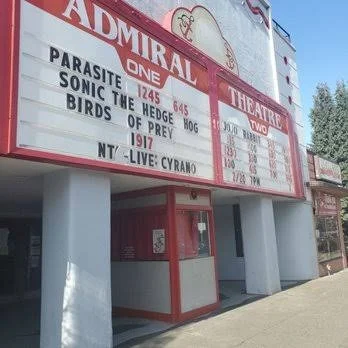
The Admiral Junction adds another layer to neighborhood life.
California Avenue and SW Admiral Way bring together restaurants, coffee shops, everyday services and one of West Seattle's most recognizable landmarks, the Admiral Theatre.
But part of what works about Admiral is that the commercial district doesn't exist separately from the residential neighborhood around it.
Leave California Avenue and you're quickly back among homes, gardens and quieter residential streets. Head the other direction and you're moving toward parks, schools and community spaces.
That mix gives Admiral a rhythm that feels distinctly neighborhood-oriented. You can run an errand, meet someone for coffee, go to the library, catch a movie or head to Hiawatha without every outing becoming a trip across the city.
A Neighborhood With Deep Roots
Admiral didn't acquire its community institutions overnight.
West Seattle was still developing as its own city when many of the pieces of today's neighborhood began taking shape. The West Seattle Library was established in the early 20th century, followed soon after by Hiawatha Playfield and Community Center. West Seattle High School later opened at its current site as the surrounding residential neighborhood continued to grow.
More than a century later, those places remain part of Admiral's identity.
You can see that history in the neighborhood's architecture, too. Residential blocks contain homes from different eras, reflecting the way West Seattle has grown and changed rather than being built all at once.
Newer homes and renovations have joined older houses over the years, but the underlying neighborhood pattern remains easy to recognize.
Everyday Life Happens Close to Home
There is an understandable tendency to describe West Seattle in terms of its biggest destinations. Alki Beach. Lincoln Park. The Junction.
But living here is often shaped just as much by smaller routines.
Walking through Hiawatha. Stopping at the library. Heading out for coffee. Seeing a familiar face at a neighborhood business. Watching a game at the field. Walking a few blocks for dinner rather than getting in the car.
Admiral has enough going on to make daily life interesting without feeling like you're living in the middle of a destination.
And when you do want the waterfront, Alki is still down the hill.
The Heart of Admiral
There is no single place that defines Admiral.
That's really the point.
The character of the neighborhood comes from the way its pieces fit together: homes and businesses, schools and parks, historic buildings and familiar gathering places.
The reopening of Hiawatha Community Center is a particularly welcome reminder of that. A building that has served West Seattle for more than a century is once again filled with classes, activities and neighbors coming through its doors.
For anyone exploring Admiral, it's worth looking beyond the places that appear on a typical list of West Seattle attractions.
Spend some time around Hiawatha. Walk the residential streets nearby. Visit the library. Continue north along California Avenue into the business district.
That's where you'll find the version of Admiral people who live here experience every day.
Not simply a place to visit, but a neighborhood built around community.